
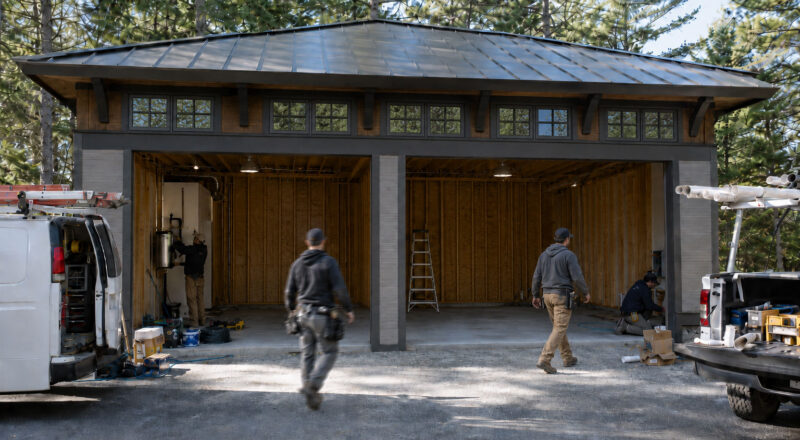
Five Essential Utilities Every Well-Equipped Garage Should Have
By Chad Haas, ASID · VAULT Custom Garage Design
Garage must-haves are usually defined by what you can see: cabinets, tools, workbenches, and storage systems. All of those matter. But some of the most valuable garage upgrades are the ones that quietly improve how the space works every day.
This article looks beyond the obvious and focuses on five often utility essentials homeowners should plan for early. These systems can make the garage cleaner, safer, easier to maintain, and more enjoyable to use.
Power where you need it. Air when tires are low. Water when something needs to be rinsed. A vacuum that can handle real garage messes. Battery maintenance for vehicles or equipment that sit unused for long periods.
These are the utility essentials that support a well-equipped garage.
The best garage is not filled with gadgets. It is planned so the things you use most often are ready, easy to reach, and not visually in the way. That is the difference between a garage that simply stores equipment and a garage that works like a complete room.
1. Garage Vacuum System
If every home garage should include one utility essential, this is it.
A wet/dry vacuum handles the messes a household vacuum was never designed for: sawdust, leaves, dust, dirt from floor mats, water near the garage door, small spills, and debris tracked in by vehicles.
For most homeowners, a quality wet/dry shop vacuum is the best starting point. It helps keep the garage from slowly becoming a dirty pass-through space.
Standard Approach: Portable Wet/Dry Shop Vacuum
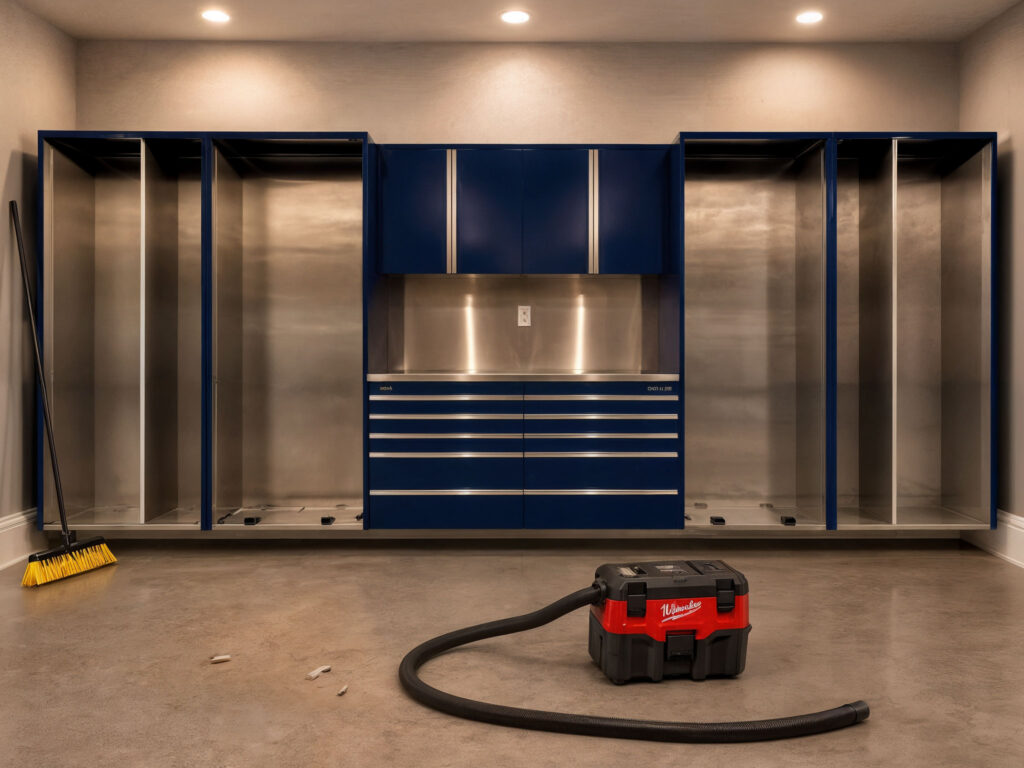
A compact, durable model like a RIDGID, Milwaukee or similar 5- to 8-gallon wet/dry vac typically runs $150 to $300 and can handle everyday garage cleanup.
The advantage is portability. The drawback is storage. These units are bulky, noisy, and need a dedicated place where they are not sitting in the middle of the garage.
In a Purpose-Built Garage
Central Vacuum or Wall-Mounted System
Higher-end garages benefit from a wall-mounted vacuum system or a central vacuum inlet with a long hose. A Griot’s Garage wall-mounted system with a 32-foot hose, or a central vacuum kit with a 30- to 50-foot reach, solves the biggest problem with shop vacs: they are bulky, noisy, and always seem to be in the wrong place. In a well-designed garage, the vacuum equipment can be concealed, the hose can be built in, and cleanup becomes as simple as opening a cabinet and pulling out the hose. The best time to plan for this is during the design or build phase, when hose access, cabinet placement, power, and wall locations can be integrated cleanly.
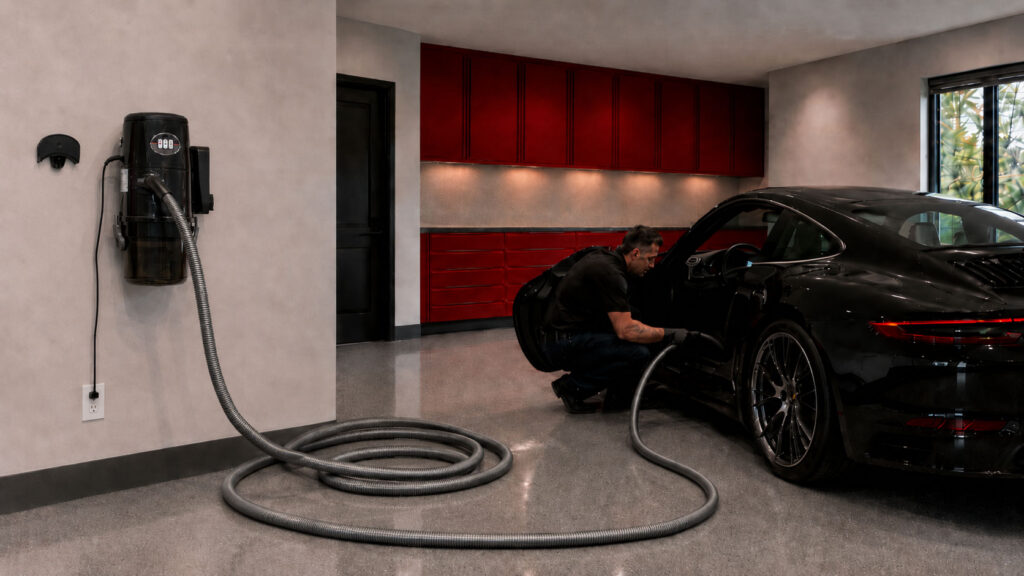
Best Placement: Place the vacuum near the vehicle bay or inside a cabinet run, with hose access planned before installation. This keeps the system easy to reach without making it visually intrusive.
2. Air Compressor or Tire Inflator
Every garage should have a reliable way to inflate tires. That does not mean every homeowner needs a large air compressor. For many homes, a compact tire inflator is enough. But some form of air belongs in the garage because tire pressure is not optional maintenance.
The National Highway Traffic Safety Administration recommends checking tire pressure monthly and notes that tire pressure monitoring systems only alert you once a tire is already significantly underinflated. Regular checks still matter because underinflated tires are often difficult to spot by sight alone.
Standard Approach: Compact Tire Inflator and Accurate Gauge

A portable tire inflator, such as a DeWalt or similar model, typically runs $40 to $100 and can be stored on a shelf. Paired with an accurate tire pressure gauge and kept near a convenient outlet, it handles basic tire maintenance for most homeowners.
The downside is convenience. If it is buried in a cabinet or stored far from the vehicle bay, you are less likely to use it regularly.
Upgraded Approach: Air Compressor with Hose Reel
For homeowners who work on their own vehicles or use air-powered tools, a larger compressor makes sense.
A 2- to 3-horsepower compressor, typically $300 to $600, provides consistent pressure for impact tools, nail guns, paint sprayers, and air ratchets. The real upgrade is running air access through the garage the same way you would plan electrical circuits.
An air hose reel with 30 to 50 feet of tubing gives you access to compressed air throughout the space without dragging loose hoses across the floor.
In a Purpose-Built Garage:
Fixed Compressor with In-Wall Air Lines and Noise Isolation
Serious garages plan the air system during construction. A fixed wall-mounted compressor with dedicated air lines run through the walls provides instant access to compressed air at multiple points in the garage, similar to a well-planned electrical layout. The compressor itself can be placed in an insulated enclosure or separate utility space to reduce noise, since compressors can be loud, often reaching 80 to 90 dB.
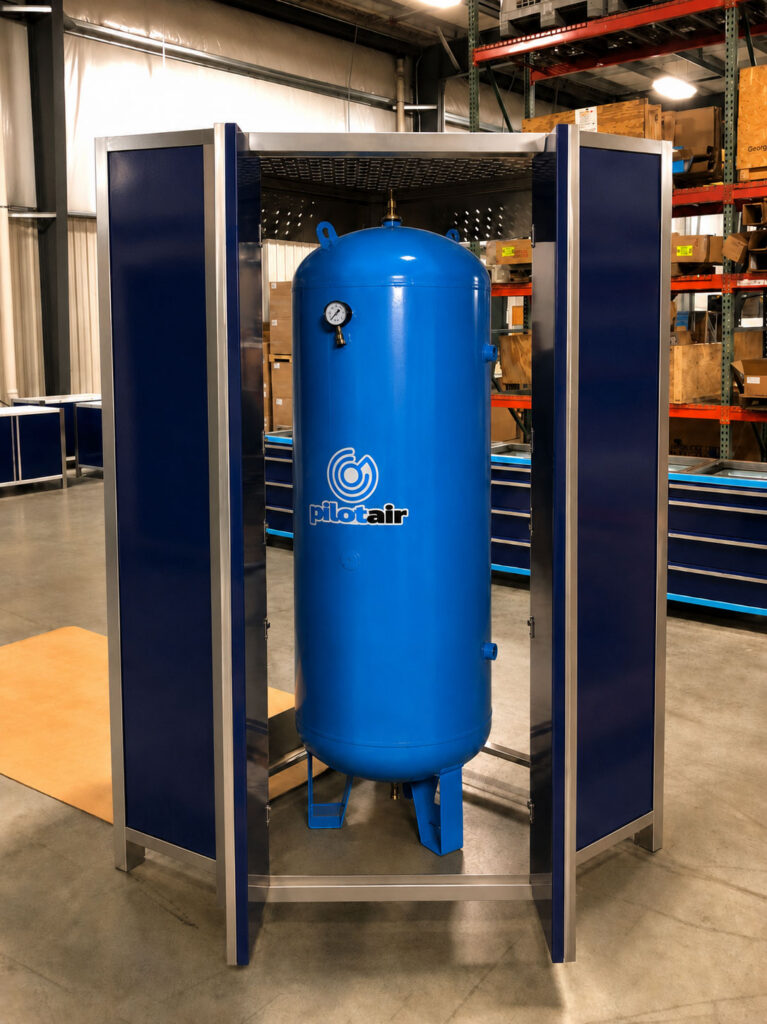
Best placement: A portable inflator can be kept anywhere. What matters is convenience and access to power; most homeowners store it near the main vehicle bay for quick use. For a fixed system, locate the compressor in a dedicated utility area or insulated cabinet and run in-wall air lines so you can reach all four tires without moving the vehicle; also extend lines to any work zones for pneumatic tools. Because compressors can be loud, put fixed units in a separate room or a cabinet lined with acoustic foam to reduce noise.
3. Retractable Power Cord Reel
A garage without convenient power becomes frustrating fast. Most homeowners eventually need temporary power for a vacuum, charger, inflator, pressure washer, detailing light, fan, or tool. The mistake is letting loose extension cords become the long-term plan.
The Electrical Safety Foundation International warns against overloading extension cords, running them through water, or using them as permanent wiring. Heavy reliance on extension cords is often a sign that more outlets are needed. That is why a retractable cord reel belongs on the list. Used properly, it gives you temporary reach without leaving cords across the floor.
Standard Approach: Heavy-Duty Retractable Cord Reel
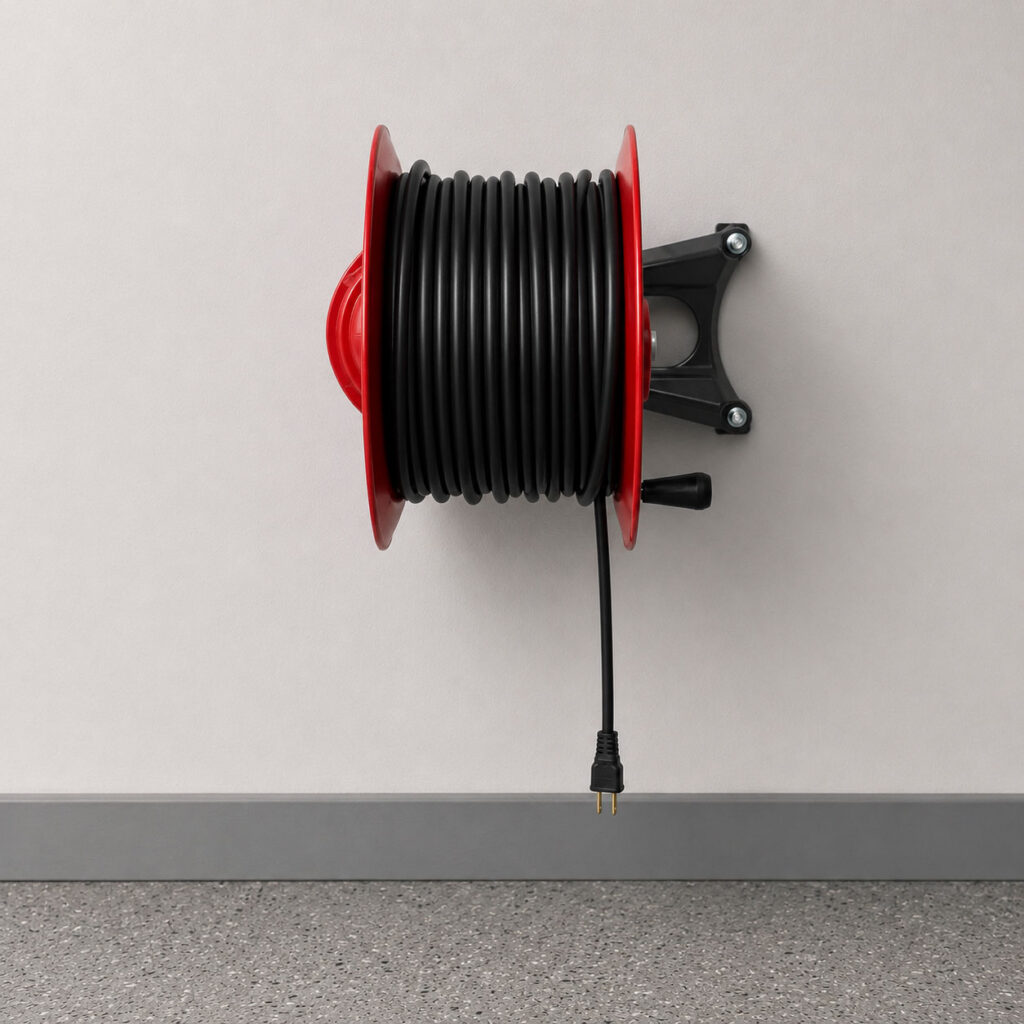
A 50-foot retractable reel with automatic rewind, like a Southwire model, runs $60 to $120. Mount it on the wall above a work zone, plug it into a properly rated outlet, and you have power everywhere in the garage without trip hazards.
In a Purpose-Built Garage
Ceiling-Mounted or Cabinet-Integrated Reel with Dedicated Circuits
In a high-end garage, power is planned during the design phase. Dedicated circuits support the compressor, charging stations, task lighting, and temporary power. A ceiling-mounted or cabinet-integrated retractable reel, like a Hubbell or similar commercial-grade system, sits out of sight until needed. Multiple task outlets above counter height, dedicated circuits for battery chargers, and intentionally concealed power points near where work happens are all specified before drywall goes up.
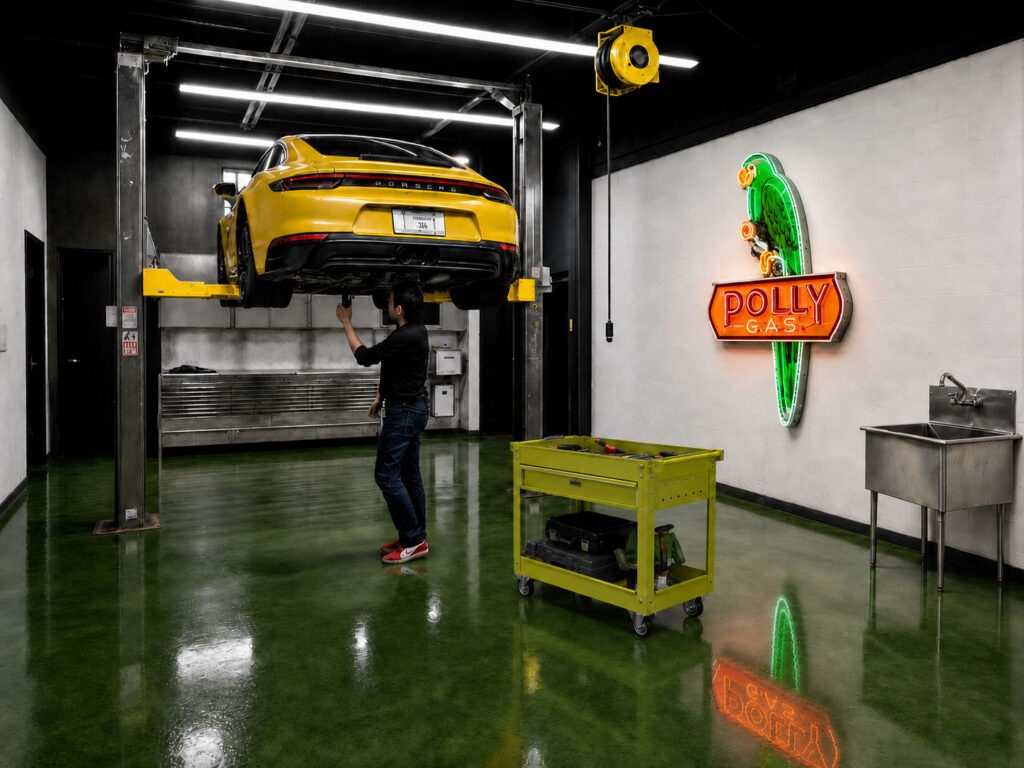
Best Placement: Above a work zone, near the front of a cabinet run, or centered where it can reach both the vehicle and workbench.
4. Hose Reel or Integrated Water Station
A hose reel is easy to overlook until the garage needs water.
A hose supports car washing, floor rinsing, garden work, pet cleanup, trash bin cleaning, and general household use. The question is not whether a hose is useful. The question is whether it stays clean, accessible, and out of the way.
Standard Approach: Wall-Mounted Hose Reel
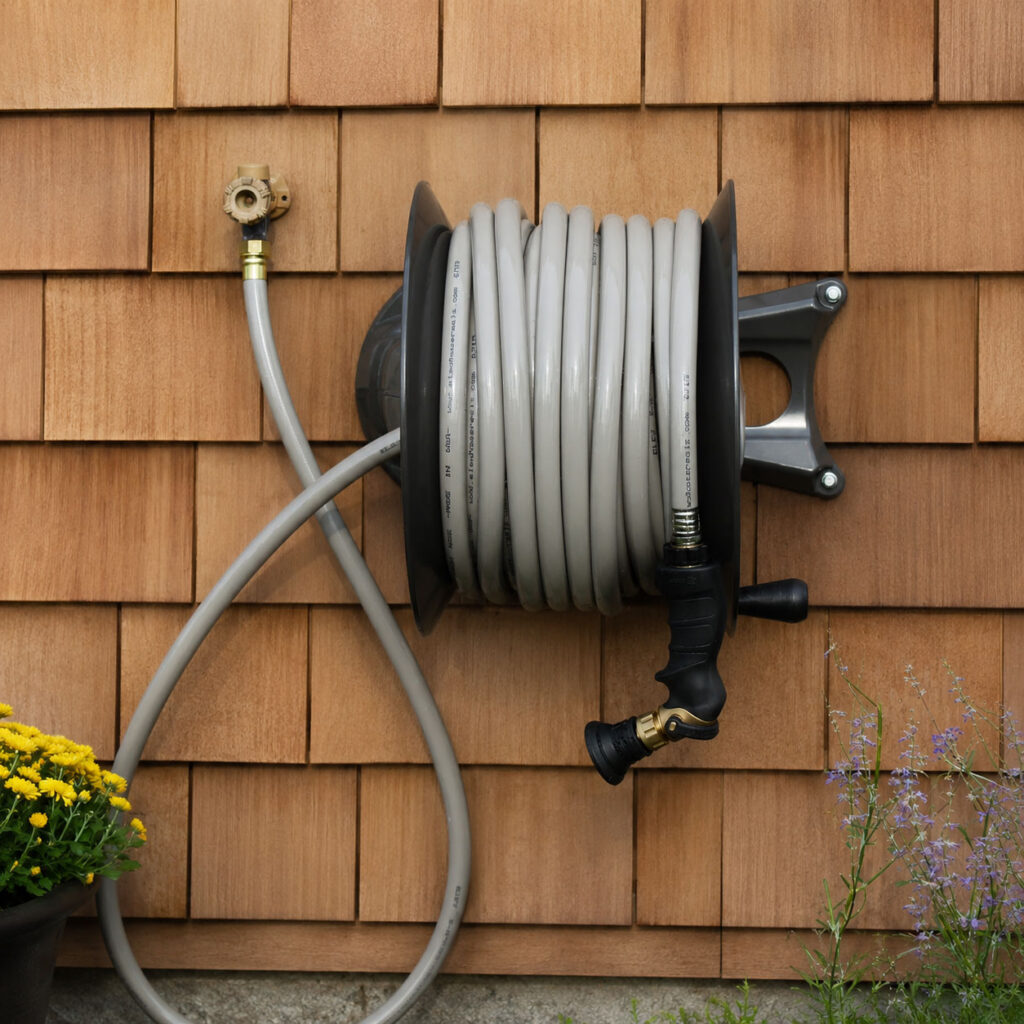
A durable wall-mounted hose reel, such as an Eley or similar aluminum model with 50- to 75-foot capacity, typically runs $80 to $150 and solves the tangled-hose problem.
Mounted near the garage door or utility wall, it becomes the go-to solution for car washing, floor cleaning, and outdoor cleanup.
In a Purpose-Built Garage
Recessed or Architecturally Integrated Water Station
In a well-designed garage, the water station is planned into the room from the start. That means coordinating the hose bib location, drainage, wall protection, floor slope, and exterior water access. Some high-end installations include hot and cold water, a recessed or enclosed hose reel, and a finished wall panel behind the water area. When planned during construction, the plumbing can be built in cleanly instead of surface-mounted later.
Best Placement: Place the hose reel near the garage opening, in a wash bay, or within a utility zone where water access will not interfere with cabinetry, storage, or vehicle display.
5. Battery Tender or Concealed Charging Station
A battery tender is not the most universal garage essential for every homeowner. But for the right homeowner, it can be one of the most important.
If the garage holds a collector car, weekend vehicle, motorcycle, ATV, golf cart, classic truck, seasonal equipment, or anything that sits unused for long periods, battery maintenance becomes part of protecting the investment.
Modern battery management is not just about charging. It is about maintaining, recovering, and extending battery life while keeping the garage clean and organized.
Standard Approach: Smart Battery Maintainer
A smart battery maintainer, such as a Battery Tender by Delran or CTEK or NOCO model, typically runs $80 to $150 and handles trickle charging, battery recovery, and long-term maintenance.
For a homeowner with a collector car, seasonal vehicle, or stored equipment, this can be essential. Most quality maintainers can stay plugged in for months without damaging the battery.
The downside is visual clutter. Chargers, cords, and leads can quickly make a finished garage look unfinished if they are not planned for.
In a Purpose-Built Garage
Concealed Charging Station Inside Cabinetry
In a luxury garage, battery maintenance should be built into the design. That may mean a dedicated outlet inside a cabinet near the collector vehicle, a labeled charging drawer, a cord pass-through, or a flush access point with concealed wiring. The goal is simple: the vehicle stays maintained, but the charger and cords stay out of sight. Some homeowners choose a dedicated charging bay with integrated cabinetry that houses the charger, organizes the cords, and keeps everything hidden when not in use.
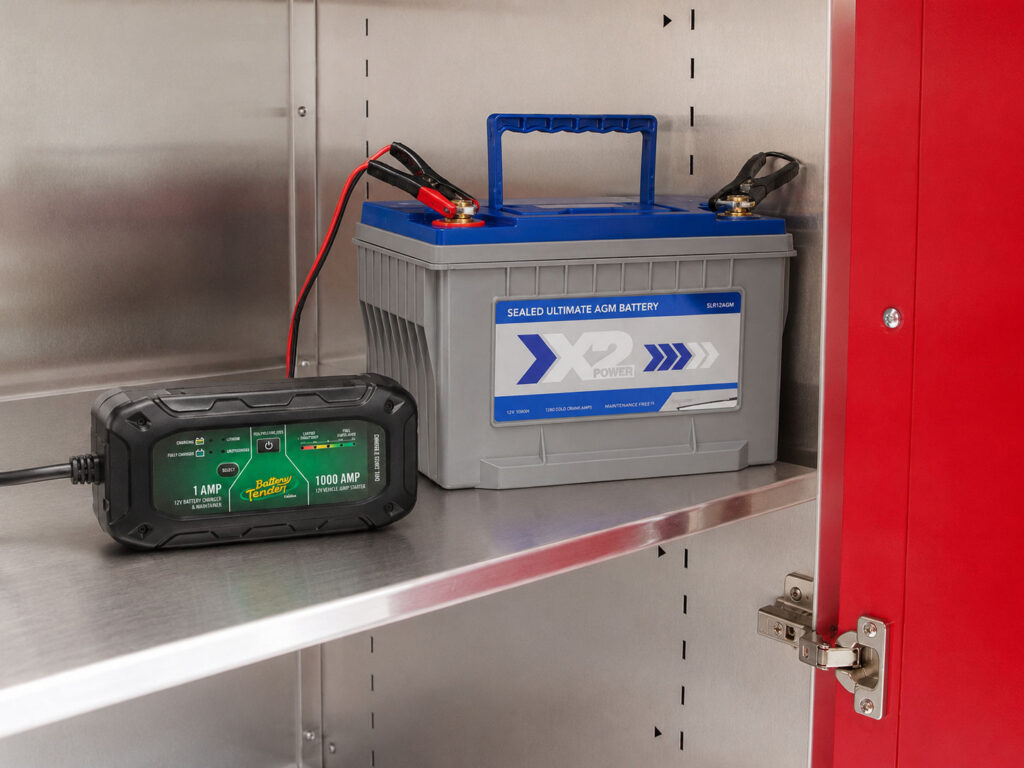
Best Placement: Place the charging station near collector vehicles, inside cabinetry, or in a dedicated charging zone outside the main sightlines.
The Real Lesson: Plan the Garage Before You Fill It
The most useful garage essentials are not the flashiest. They are the systems that make the room work: cleaning, air, power, water, and battery maintenance. A homeowner can buy all five after the garage is finished. But the best result comes when they are planned before the room is complete.
That is the difference between equipment added later and a garage designed properly from the beginning.
In a basic garage, these essentials may sit on shelves, hang from hooks, or roll around the floor. In a designed garage, they should be integrated with the same thought given to cabinetry, lighting, flooring, and vehicle placement.
The goal is not to own more equipment. The goal is to make the garage easier to use every day, while keeping the room clean, composed, and worthy of the home.
Plan the utilities early. Hide what should disappear. Keep what you use within reach. That is how a garage starts to feel designed, not merely equipped.
About the Author
Chad Haas is the founder of VAULT and the only interior designer credentialed by the American Society of Interior Designers (ASID) focused exclusively on luxury garage design. He has spent more than twenty years designing and furnishing high-end garages for homeowners, collectors, architects, and builders across the United States and Canada. VAULT is headquartered in Beaverton, Oregon, and serves clients worldwide.